Free Shipping on orders over $99 FREE 365-DAY RETURNS
Filters Fast - Filter. Purify. Protect.

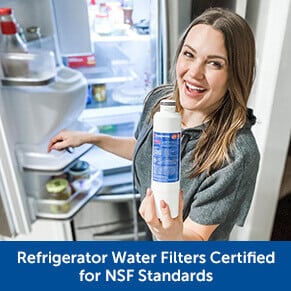
Refrigerator Water Filters Certified for NSF Standards.

Drink only the best and choose from our large selection of brand name filters guaranteed to provide long lasting value.
Shop all Refrigerator Water Filter Brands
Shop All Refrigerator Brands
Refrigerator water filter diagram showing filter components and NSF certification standards

A Quick Guide to NSF Standards

When purchasing a refrigerator filter, you will want to ensure that the filter has been tested and certified by the NSF. There are a few different NSF certifications you will see when shopping for fridge filters. Here's a simple guide to help you know what each NSF certification means.

NSF 42: This means that the filter has been tested and certified to reduce chlorine taste and odor.

NSF 53: This means that the filter has been tested and certified to reduce harmful contaminants that can cause health effects. This can mean contaminants including lead, mercury, and more.

Frequently Asked Questions

A refrigerator water filter is designed to purify the water in a fridge with a water dispenser and/or ice maker. They remove bacteria, contaminants, and other harmful impurities from the water. This means that every time you use the filtered water and ice from your fridge, you're consuming clean and safe water.

Refrigerator filters typically last up to six months before they need to be replaced. Replacing your refrigerator water filter regularly will ensure the water you get from your refrigerator is always clean. With a fridge filter, you can have peace of mind knowing you're getting filtered and healthy water with every sip.

Changing fridge water filters is important because it helps to reduce contaminants like chlorine, lead, rust, and other particles. Depending on your location and water source, the contaminants in your drinking water may vary.

It's important to change the water filter in your refrigerator to maintain optimal performance and keep your drinking water safe. Filters need to be changed regularly to get rid of dirt, debris, chlorine, and other impurities that can end up in your water. Keeping your filter up-to-date is the best way to guarantee clean and healthy drinking water.

We know how hard it can be to remember what filter you need and when to change it, which is why we created the Home Filter Club! Our refrigerator filter subscription program will send you the filter you need right when it needs to be changed.

Testing your drinking water is the best way to find out what kind of contaminants might be in it. Your water quality will depend on where you live and how your water is treated. The most common water sources in the United States are municipal water or well water supplies.

Depending on where your water comes from, it can include microorganisms like bacteria and parasites, minerals like arsenic and lead, organic pollutants like agricultural runoff, and industrial pollutants like pharmaceuticals. These pollutants can enter your water supply through the pipes and plumbing or may originate in surface water and may be exposed to agricultural and industrial sources. By having your water tested, you can ensure that you and your family are drinking safe and clean water.

To find the correct fridge filter replacement, you should start by checking the model number of your refrigerator. You can also search for your refrigerator water filter replacement by locating the filter part number on your existing filter.

Once you have this information, you can use the search box to find the filter you need. This will allow you to identify the correct water filter for your refrigerator including specific dimensions and details about installation. Once you have the correct filter, experts recommend replacing your filter every six months.

When selecting a replacement refrigerator filter, you will want to make sure that the filter has been tested and certified to remove the contaminants you need it to. The most common types of certifications that you'll want to look for are NSF 42 and NSF 53.

If a filter is NSF 42 certified this means that the filter will reduce aesthetic contaminants like chlorine taste and odor. An NSF 53-certified filter means that the filter will reduce contaminants that are known to cause adverse health effects like lead and mercury as well as chlorine taste and odor.

For more information about how to find out what filter you need for your refrigerator filter check out our blog.


Why Choose Filters Fast for Refrigerator Water Filters?

When you’re searching for refrigerator water filters online, you’ll quickly notice that the options are endless. Your fridge is a costly investment, so it’s important to accept nothing less than the best when it’s time for a replacement filter. At Filters Fast, you’ll find a curated selection of OEM and compatible refrigerator filters for a wide range of refrigerator brands and models, along with home air and water filters for your other household needs. With our helpful, easy-to-navigate website, it’s easy to find exactly what you need - and best of all, our products have all been vetted for fit, quality, and durability. You’ll easily find all the product specifications you need to verify that you’re shopping for the right products, and you can also set up auto delivery through our Subscribe + Save service to keep replacement filters coming right when you need them. Free returns, outstanding customer service, and the best deals all combine to make your experience even easier. Enjoy total confidence that you’re getting the right filter at the right price.

How to Find the Right Refrigerator Water Filter

Find Your Refrigerator Model Number

Finding your model number is quick and easy. In most cases, you can locate this information inside the refrigerator or freezer compartment, near the door frame, or in some cases, behind a drawer or interior panel. If you don’t find your model number in one of these places, don’t worry. Give the Filters Fast support center a call and we’ll help you find the right information for your specific appliance. Whether you’re shopping for a new water filter or looking for refrigerator replacement parts and accessories, knowing your model number makes it easier to identify compatible products.

Check the Part Number on Your Current Filter

To find the right replacement filter, search using either your refrigerator’s model number or the part number printed on your current filter. If you’re unsure where to find either number, check your refrigerator’s owner’s manual or inspect the existing filter for its identifying information. Taking a moment to verify these details can help you find a replacement filter that works with your refrigerator.

Get the Right Filter Without the Guesswork

Whether you’re replacing an OEM filter or switching to a high-value compatible option, we’re here to help you keep your fridge performing at its best and your water tasting clean, crisp, and refreshing. Not all refrigerator filters are created equally, so it’s important to choose one that’s been thoroughly tested for quality, performance, and proper fit. Start exploring our impressive product selection today and find the perfect filter for your refrigerator!


Frequently Asked Questions:

How often should I replace my refrigerator water filter?

When it comes to refrigerator water filter replacement, there are a few factors to consider. For example, how many people live in your household? How many gallons of water are being used each day? How often does the manufacturer of your refrigerator filter recommend replacement? When you know the answers to these basic questions, you can find a replacement schedule that fits your routine. In general, most fridge water filters should be replaced every six months - but high-use households may need more frequent replacement to maintain optimal water quality and filtration performance.

How to replace a refrigerator water filter?

Fridge filter installation is quick and easy, but the process depends on your filter type. For example, twist-in water filters or push-in filters simply push or turn into a dedicated slot inside your refrigerator. In-line filters involve extra steps because they are installed on the water line outside your fridge, so it’s likely that you’ll have to connect tubing and replacement refrigerator water valves to complete installation.

Keep in mind that filter size, shape, and locking mechanisms can vary by brand and model, so two filters can look similar, but offer completely different fits. Some refrigerators have filters in the grille, others inside the interior compartment, and some hidden behind a panel. Always check your refrigerator’s manual or the filter’s instructions to ensure a proper fit and smooth installation.

How do I choose the best refrigerator water filter for my model?

Finding the right refrigerator filters is easy when you shop at Filters Fast - you just need a few key details. First, check your refrigerator’s model number, which is usually located on a label inside the fridge or freezer compartment. You can also look at the part number printed directly on your current water filter, which gives you an exact reference for choosing a compatible replacement. Once you have either number, simply enter it into the search box on our site to pull up all available replacements - including compatible, OEM, and in-line refrigerator filters. Each product page provides important details like dimensions, fit type, and installation information, so you can easily choose the filter you need.

As you compare options, it’s also important to consider performance certifications. Filters that are NSF 42 certified help reduce chlorine taste and odor, which improves the overall flavor and clarity of your drinking water. NSF 53 certified filters go a step further and reduce contaminants with known health impacts, such as lead or mercury, while also handling chlorine taste and odor. We also offer related parts like icemakers, pitcher filters, and other components that keep your water and ice tasting fresh and your appliances running smoothly.

Can I search for a replacement using my old filter number?

Absolutely! Your old filter's part number can help you quickly locate a replacement. Enter the number printed on your existing filter into the Filters Fast search bar to explore available options, including OEM and compatible alternatives. Before purchasing, check the product details to verify that the filter works with your refrigerator. If your old filter number doesn't produce a clear match, try searching by your refrigerator's model number or contact our support center for help finding the right replacement.

What is the difference between OEM and compatible refrigerator filters?

OEM (or Original Equipment Manufacturer) filters are made by the manufacturer of your specific refrigerator, and they’re designed with perfect fit and performance in mind.

Compatible fridge filters are made by other brands, but they’re built to fit the same models, meet the same standards, and typically save you money. For clean, safe water, you can’t go wrong with either option - the choice will ultimately come down to your preferences and budget.

Are compatible refrigerator water filters safe to use?

Yes! Compatible refrigerator water filters offer a practical alternative to OEM filters, and they’re often available at a lower price. At Filters Fast, we carry compatible options for customers who want quality filtration without paying more than they need to. You can save even more by shopping our discount filter items for deals on select products. The key is choosing a filter designed for your refrigerator and checking its product specifications for relevant certifications and contaminant-reduction claims. Since filtration capabilities vary by product, reviewing these details helps you find an option that fits your appliance and your water quality needs.

What does NSF-certified mean for a refrigerator water filter?

When a refrigerator water filter is NSF-certified, it means the product has been evaluated against specific standards established by NSF (National Sanitation Foundation). Depending on the certification, this may cover material safety, structural integrity, or the reduction of particular contaminants. Certification doesn't mean a filter removes every contaminant, so always check which claims apply to the specific product. Reviewing these details helps you choose a filter based on the type of water filtration you want.

What is the difference between NSF 42 and NSF 53?

When purchasing a refrigerator filter, you will want to ensure that the filter has been tested and certified by the NSF. There are a few different NSF certifications you will see when shopping for fridge filters. Here's a simple guide to help you know what each NSF certification means.

NSF 42: This means that the filter has been tested and certified to reduce chlorine taste and odor.

NSF 53: This means that the filter has been tested and certified to reduce harmful contaminants that can cause health effects. This can mean contaminants including chlorine taste & odor, lead, mercury, cysts, sediment, and more.

Do all NSF 53 refrigerator filters remove the same contaminants?

NSF/ANSI 53 certification is an important starting point, but it isn't a complete list of everything a refrigerator water filter can remove. Each filter has specific contaminant-reduction claims based on its certification. For example, some are certified to reduce lead, while others may have additional claims for substances such as certain PFAS compounds. Always check the individual product's specifications to confirm which contaminants it reduces rather than relying on the NSF 53 designation alone.

Do refrigerator water filters remove lead?

Some refrigerator water filters can reduce lead, but this capability varies by product. To find a suitable option, look for a filter specifically certified to reduce lead under NSF/ANSI 53. Not all filters certified to this standard address the same contaminants, so review the product specifications before purchasing. If you're comparing filters for refrigerator water, check the certified reduction claims to make sure lead is listed. Choosing a filter with verified performance claims helps you make a more informed decision about your drinking water.

Do refrigerator water filters remove chlorine taste and odor?

Many refrigerator water filters reduce chlorine, which can give tap water an unpleasant taste or smell. These filters can help make your drinking water more enjoyable, although the results depend on the filter's design and certified performance. NSF/ANSI 42 covers aesthetic improvements, including chlorine taste and odor reduction. Keep in mind that performance varies, so check each product's specifications to verify its chlorine-reduction claims. A properly matched replacement filter can help keep your refrigerator's drinking water tasting fresh.

Do refrigerator water filters remove sediment, cysts, or mercury?

The answer depends on the filter and the contaminants you're concerned about. Some refrigerator filters are designed to reduce sediment or certain cysts, while others may have a certified claim for mercury reduction. These capabilities aren't universal, even among filters certified to the same NSF standard. Before purchasing, review the product specifications and look for the exact contaminants listed in its performance claims. This is the best way to determine whether a particular filter addresses your water quality concerns.

What happens if I do not replace my refrigerator water filter?

Putting off a refrigerator water filter replacement might not seem like a big deal at first, especially if your water still tastes fine. However, an overdue filter may gradually lose its ability to reduce contaminants. A buildup of trapped particles can also restrict water flow, potentially affecting your refrigerator's water dispenser and ice maker performance. You might eventually notice changes in taste or odor, too. The best way to avoid these issues is to follow your refrigerator manufacturer's replacement guidance rather than waiting until something seems wrong.

Can an old refrigerator water filter affect water pressure?

Yes. If your refrigerator's water dispenser has slowed to a trickle, an old filter could be contributing to the problem. As the filter collects particles over time, water may have a harder time passing through it, reducing the flow from your dispenser. Replacing the filter on schedule helps maintain consistent water delivery. If a new filter doesn't resolve the issue, check for a bent supply line, low household water pressure, or other potential causes, which can often be resolved with replacement ice maker parts and accessories. Your refrigerator's manual can help you identify the next troubleshooting steps.

Why does my refrigerator water taste bad after replacing the filter?

Unpleasant-tasting water after a filter change often means the new filter needs to be flushed before regular use. Depending on the model, the filter may release some carbon dust or trap air during installation, which can temporarily affect water quality and taste. Run the recommended amount of water through the dispenser, following the instructions provided with your filter or refrigerator. If the taste doesn't improve, verify that the filter is the correct model and that it’s properly seated. Persistent changes in taste may have another cause, so consult your refrigerator's troubleshooting guide if needed.

Why is my refrigerator water dispenser slow after installing a new filter?

If your refrigerator's water dispenser is slow after a filter change, start by checking that the new filter is installed correctly. A filter that isn't fully seated or locked into place can restrict water flow. Some refrigerators also require you to flush several gallons through a new filter before normal dispensing resumes. Follow the instructions for your specific model to complete this step. If the water still flows slowly, inspect the supply line for kinks and confirm that you purchased a compatible filter. If the line is damaged, cracked, or leaking, replacing your refrigerator water lines and hoses may help resolve the problem. Persistent problems may indicate an issue with the water supply or another refrigerator component.

Why is my new refrigerator water filter leaking?

A new refrigerator water filter should fit snugly and create a secure seal. If water leaks after installation, the filter may be incompatible, incorrectly seated, or affected by a damaged seal. Check the product number against your refrigerator model and review the installation instructions to make sure the filter is positioned correctly. Look for visible damage around the filter and its connection point. If reinstalling the correct filter doesn't resolve the leak, the filter housing or another part of the water system may need inspection. Address ongoing leaks promptly to help prevent water damage.

How much water should I flush through a new refrigerator filter?

A new refrigerator water filter usually needs to be flushed before you begin using it for drinking water, but the amount depends on the model. Manufacturers often recommend dispensing several gallons to clear out air and loose carbon particles from the filter. You may need to empty the dispenser in multiple batches, following the instructions for your specific refrigerator. Check the owner's manual or filter packaging for the recommended volume instead of guessing. Proper flushing can help prevent temporary changes in water taste or appearance.

How do I reset the refrigerator water filter indicator light?

To reset your refrigerator water filter indicator, start by checking the instructions for your specific appliance. Some refrigerators have a dedicated reset button near the water dispenser, while others require you to use the control panel. You may need to hold a button for a few seconds or select a reset option from a menu. It's best to reset the indicator after changing the filter so the reminder reflects the new filter's service interval. If the light won't turn off, your owner's manual is the best place to find model-specific troubleshooting steps.

Can I use my refrigerator without a water filter?

Some refrigerators can operate without a water filter, but it depends on the model. If your appliance requires a filter for water to flow through the dispenser or ice maker, you may need to install a compatible bypass plug instead. Keep in mind that bypassing the filter means water won't receive the contaminant reduction that the filter provides. Check your refrigerator's owner's manual to see whether filter-free operation is supported and whether a bypass plug is required. If you use the dispenser, consider your household water quality when deciding how to manage filtration.

What is a refrigerator water filter bypass plug?

A refrigerator water filter bypass plug is an accessory that takes the place of a filter cartridge inside certain refrigerators. Rather than filtering water, it creates the connection needed for water to continue through the appliance's plumbing system. This small part can be particularly important in models designed to detect a filter or require a specific connection in the filter compartment. Bypass plugs aren't universal, so their shape, locking mechanism, and compatibility depend on the refrigerator brand and model. Check your owner's manual or the manufacturer's parts information to identify the correct plug for your appliance.

What is the difference between a refrigerator filter and an inline water filter?

Refrigerator filters and inline water filters both treat water before it reaches your glass or ice tray, but they connect to your water system differently. A standard refrigerator filter is designed to fit into a built-in filter housing, often inside the fridge or near the bottom grille. Inline refrigerator water filters are installed along the water supply tubing leading to the refrigerator. This means inline models may require access to the water line for installation or replacement, while built-in filters are usually changed at the appliance's filter compartment. Always verify the filter type and compatibility before ordering a replacement.

Can an inline water filter be used with a refrigerator or ice maker?

Yes, many refrigerators and ice makers can use inline water filters, but compatibility is essential. The filter must be suitable for the appliance's water supply, connection fittings, and intended use. Inline filters are typically installed along the water line leading to the refrigerator or ice maker, rather than inside the appliance. Some can serve both water dispensing and ice production, depending on the system. Before purchasing, check your appliance's manual and the filter's specifications to confirm the correct application. This can prevent connection problems and allow you to choose a filter with the features you need.

Are Filters Fast® filters compatible with major refrigerator brands?

Yes! Filters Fast is proud to offer refrigerator water filters that work with all your favorite appliance brands, including:

GE Appliances refrigerator water filters

Samsung refrigerator water filters

Kenmore refrigerator water filters

Electrolux refrigerator water filters

Whirlpool refrigerator water filters

Frigidaire refrigerator water filters

Maytag refrigerator water filters

Amana refrigerator water filters

LG refrigerator water filters

KitchenAid refrigerator water filters

Bosch refrigerator water filters

Our filters are designed to fit your refrigerator perfectly, whether you opt for an OEM filter or a high-quality compatible option. With Filters Fast, you and your family can enjoy fresh, clear, and clean ice every day.

Where is the water filter located inside my refrigerator?

Your refrigerator's water filter may be inside the main compartment, behind a small panel, or near the bottom front of the appliance. In some refrigerators, the filter is located in the freezer rather than the fresh food section. Because placement differs by brand and model, it’s best to check your owner's manual for the exact location and instructions for accessing the filter. If you don't have the manual, searching by your refrigerator's model number can help you find model-specific guidance.

Does Filters Fast offer an auto-delivery program to help me remember?

Absolutely! Thanks to our convenient auto delivery options, you can schedule your refrigerator water filters to arrive automatically on the timeline that works best for your household. No more guessing when it’s time to replace a filter - you’ll get fresh, high-quality filters delivered right to your door!

Get Help and Support Need Help?
X